Blue-green deployment is right when you want a fast and dependable way to deploy new software versions with minimal downtime and easy rollback capabilities. Blue-green deployment is a technique that uses two similar production environments, known as Blue and Green. A staging surroundings is ideal when you want a sensible testing environment to validate new options and updates earlier than they go stay. The staging surroundings permits builders and QA groups to conduct thorough testing to guarantee that everything works as anticipated underneath circumstances much like the reside AlexHost SRL setting. The staging environment is a pre-production setting that mirrors the production setting as intently as potential. If something goes wrong – you shortly change back to the earlier occasion.
- Rolling deployment mitigates this issue as a result of it requires just a single further node.
- Run two equivalent manufacturing environments, “blue” and “green,” and switch site visitors between them.
- The results are analyzed to determine which version performs higher or meets the specified objectives extra effectively.
- Despite its benefits, blue-green deployment requires vital resources, as sustaining two equivalent manufacturing environments could be pricey.
- In a conventional improve, the load balancer closes all software site visitors for the servers to go offline and update.
If any pod fails through the replace, Kubernetes can roll again the modifications or substitute the failed pod, maintaining the application’s desired state. However, rollbacks could be extra complicated as you must revert modifications on particular person situations rather than switching environments. If you discover an issue, you can pause the deployment, and roll again the problematic situations to the previous model. A rolling deployment is a deployment strategy that slowly replaces earlier variations of an software with new versions of an software by utterly replacing the infrastructure on which the application is operating. Nonetheless, no matter which deployment technique you choose, function flags can take your deployments to the following level. Through feature flags, LaunchDarkly helps considerably reduce dangers during deployment and supply a robust approach to test, deploy, and manage code.
Why Use A Rolling Deployment Strategy?
Nonetheless, for many groups (especially those handling critical applications or complicated updates), the advantages of blue-green deployments are price their weight. If something goes wrong, simply flip again to Blue. This technique entails sustaining two identical production environments, creatively dubbed “Blue” and “Green.” In this setup, each change that passes your automated checks is routinely deployed to production. Continuous Integration is all about frequently merging code modifications right into a central repository. It automates the method of integrating code changes, working exams, and preparing for deployment.
]]>Am I Able To Examine My Own Web Site’s Hosting Provider?
Scorching standby is the quickest of the three as a outcome of it’s already running and current. A warm standby is partially ready, but not fully synchronized or always energetic. If the app can’t reconnect cleanly, the failover may fit at the infrastructure layer while customers still see errors. The system does not have to be built from scratch or brought ava.hosting online from cold storage.
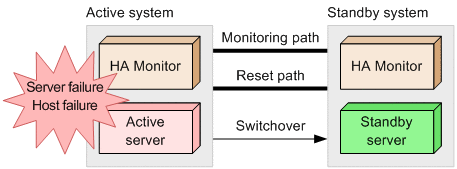
- Cold standby is a catastrophe restoration method used in system design where you could have a identical system that acts as a backup for your main system.
- In a virtualization or cluster environment, it could imply stateful replication of workload knowledge and configuration.
- A true hot standby is reside, aligned, and failover-ready.
Increased Reliability
Moreover, we will run exams and queries towards the secondary server to find a way to not interfere with the operations of the first server. If the database does not have a backup which can take its place in case of failure, then all of your operations that depend on the database may be affected from only a single point of failure. Some domains resolve directly to their host’s infrastructure; others sit behind a CDN or proxy. When the primary server fails, the secondary server will automatically switch all system management to the secondary server.
Key Features Of Sizzling Standby
Whether Or Not it’s a cold, heat, or sizzling standby setup, every method carries distinctive trade-offs between value, complexity, and resilience. Here, failover happens routinely, and customers might not even discover — because the standby system picks up exactly where the first left off. If the server fails, the IT team restores the service from a nightly backup and reruns the duty. It’s not working, but when your major automotive breaks down, you can start it up and drive — though it’d take a while to get it prepared. These systems should be resilient to failure because people’s lives or large-scale operations could depend on their availability.
]]>